Breaking Bosnia
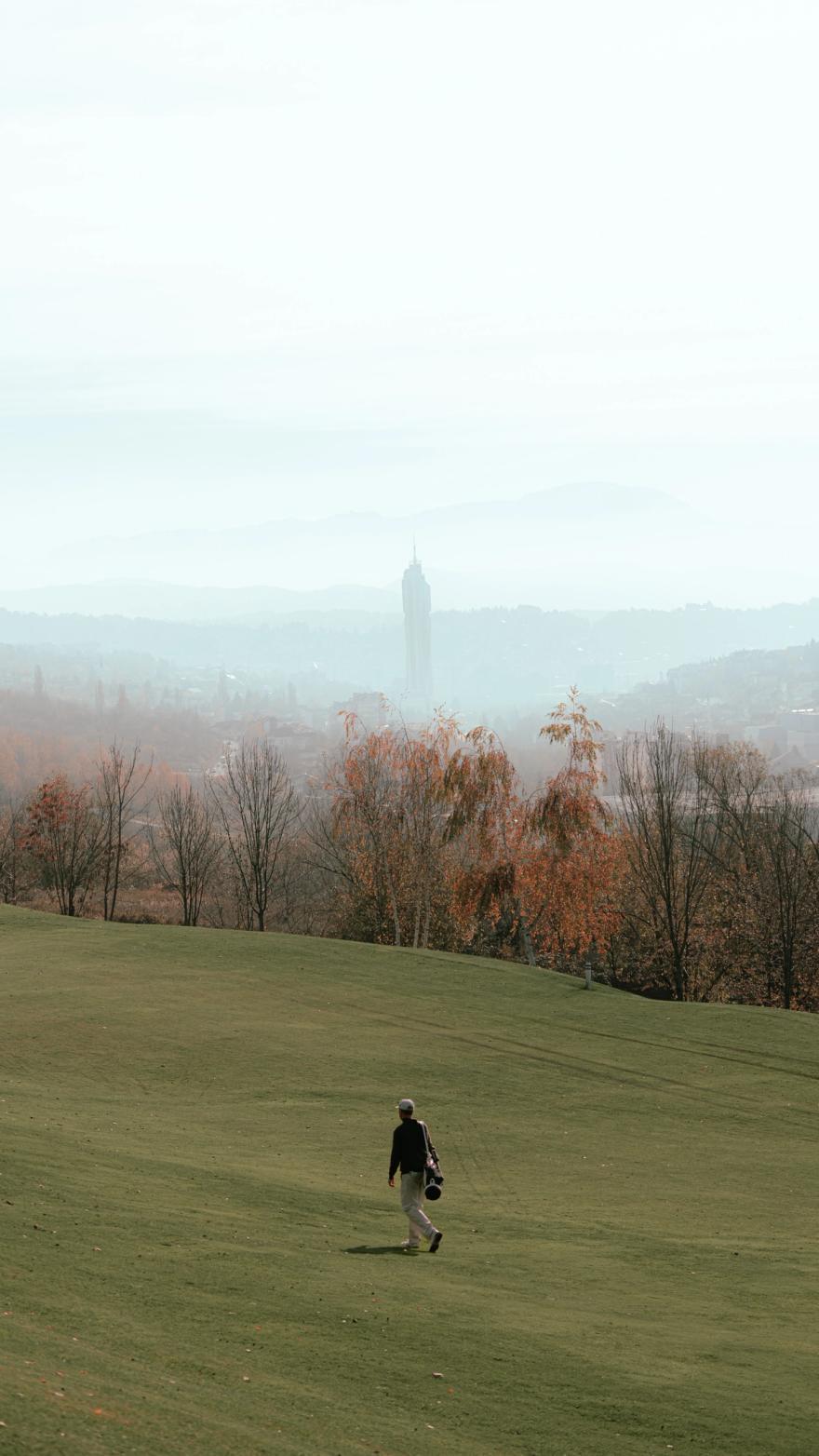
A thick fog settles most mornings over the Sarajevo Valley during Autumn. For a city with an eerie history, its cloaked appearance in the dense morning mist feels a little on the nose. Elaborate mosques and bullet-riddled facades protrude through the gaps in its milky armour.
The blanket is slowly lifting when we arrive at Sarajevo Golf Club, perched on the hill to the north east of Bosnia’s capital. But what sounds like perfect timing is in fact the result of a flight detour to Croatia. Conditions were too sketchy to land a plane - a common problem at this time of year. The £27 RyanAir flight is starting to make sense.
My stress for our delayed arrival is exacerbated as I begin speaking to the Club Manager, his warm welcome quickly turns inquisitive:
“We don’t get many golf videos shot in Bosnia, what is your plan whilst you’re here?”
“We’re making a video where I try to break the course record at both courses in the country”
“Interesting, you know there are 3 golf courses in Bosnia, right?”
The following morning another tide of milky fog floods up the valley walls to the golf course on the hill.
The following morning another tide of milky fog floods up the valley walls to the golf course on the hill.
Sat by the clubhouse window I nervously glance from my watch to the wall of white and back again. It's well past midday when the sun starts to melt through its layers but it's too late for me. The addition of another golf course to the schedule, turning countless hotel, restaurant and golf course bookings redundant, as well as the meteorological realities of Eastern Europe in November renders me catatonic.
What was once 7 days to conquer 2 golf courses, has now become 5 and a half days to conquer 3: making me a moron on 2 accounts.
I shake myself from my funk and head to the first tee to look across a short 6 hole course wedged into the side of the hill. “The record is -5” rolls off Club Manager Amar’s tongue with a sickening sense of delight. I’ll have to birdie every single hole to beat the record and succeed on this leg of the journey. My surprise at the target score is heightened by the fact that golf has only existed in this country for 24 years: surely not enough time for anyone to master the game? It was transported from Slovenia by the founder of this very club.
The junior member who has joined me for my 6th course record attempt of the day is related to him. He explains that golf’s exclusion from the country was simply a matter of priorities. The gruesome 4 year war that consumed the country in the 90s put leisure activities at the bottom of the to-do list. But since then, Bosnians have looked for ways to improve their lifestyle, now they’re gradually catching the bug.
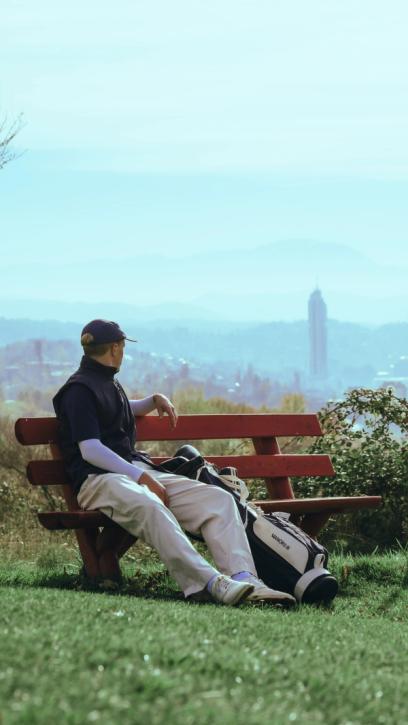
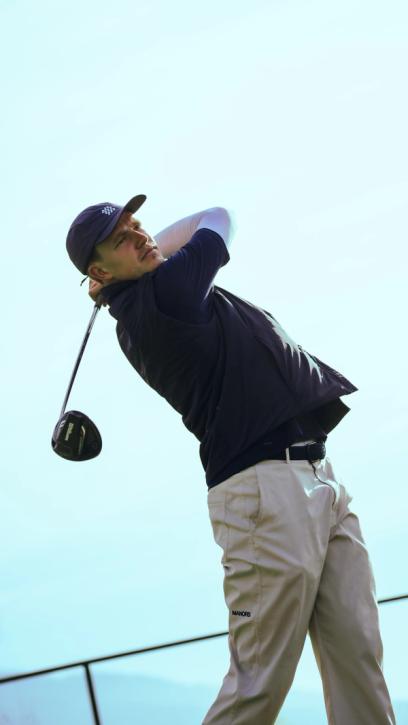
The rain pours down on my second day of course record-ing at Sarajevo GC. Lip outs of all kinds deliver debilitating body blows until the referee stops the fight. I turn to the city for some cultural respite.
Even on a gloomy day the city hums with energy, but it's a different hum to the cities I know. London, New York and Tokyo vibrate with an infectious buzz, cultural hubs teaming with innovation, a chance for your big break just around the corner. But the tune here is a little different. It's lower in pitch and it's playing through a gravelly old record player. Boxy VW Golf’s line the streets and shop fronts emblazoned with cyrillics flicker through the rain.
Starting in the 15th century, The Ottoman Empire ruled this land for over 400 years and that imprint dominates the landscape. Islam remains the majority religion, Muslim prayer trickles across the city from its sea of mosques. Intricate Ottoman architecture envelops the hamams (baths) and hans (inns) and Middle Eastern aromas from delicacies like burek warm the streets.
Beyond the elaborate cornicing and minorets, the hum tells a deeply complex story of years gone by. The brutalities of the war in the 90s linger in the air, but as we ascend the hill alongside the Kovaci Martyr’s Cemetery, the weight of loss is stifling. The site remembers the lives of over 11000 residents who were killed during the Serbian siege of the city in May 1992.
But as much as this country is defined by its recent history, it is also looking toward a better future. North of the capital, deep in an area of natural beauty known as the Tajan Nature Monument, is the venue that evaded my pre-trip research. At the end of Forest Creek’s 8km driveway, an ultra modern, artfully lit clubhouse emerges beyond the gates.
“Minus 6…you can do it” are the words extended to me by the club’s owner as I arrive on the first tee for my opening 9. Another confusingly low course record sets the tone for the next 2 days at Forest Creek where short holes stretch along a miniature tree lined valley. It takes me until the following morning to threaten my target score and we eventually leave the sanctuary of Forest Creek and make our way to Mostar.
The sun is setting as we park up in the ancient city. Every Google search for Mostar produces a similar image: an enormous stone bridge arching high above a turquoise blue river. It's the perfect site for the introduction to the video and we make our way down to the river side to set the stakes for the challenge I’m enduring.
But what seems like a beautiful piece of architecture, in fact tells a different story. The city itself is named after this crossing, derived from the Ottoman Turkish word mostari, meaning “bridge keepers”. That was the name given to the guards who protected the crossing at the heart of the city when it was constructed back in 1577. The stone arch stretching 29 metres across the Neretva River was the engineering marvel of its day.
Then in 1993, during the Croat-Bosniak conflict, the bridge was destroyed by artillery shelling. The ruins of the ancient crossing revealed more than just physical destruction. It highlighted both the cultural cost of war that the nation had been forced to pay for years and the dismantling of a connection between the city’s Muslim East and Catholic West.
Thankfully in 1997, the bridge was restored using traditional Ottoman techniques. Original stones recovered from the river were incorporated into the reconstruction and 20 years on, over 1.5 million people visit the site each year. As we make our way through a plate of cevapi (meat sausages) and dolma (meat stuffed vegetables) (they like their meat) from our restaurant that overlooks the bridge now glowing under the moonlight, I consider the places golf has taken me.
Often I’m a pilgrim, travelling for miles to a promised land of golf heritage and mindblowing course design: Askernish, Lofoten Links, Cabot St Lucia top those list of adventures. But here, something is different. This time I didn’t follow a road map to a golf destination certified by thousands of golf nuts before me. Fuelled by a silly challenge, I came here exactly because of the country’s golfing shortcomings. I travelled despite the scoffing, the questions of ‘you’re going where to play golf?!’ and my own wave of apprehension as to what lay ahead.
But exploring pastures new, without fail, pays dividends.
On the other side of my trepidation was a real life, captivating history lesson about one of Europe’s most pivotal cities and at the heart of that, countless people with open arms trying to grow a minority game in a country getting back on its feet.